
No products in the cart.
Nicomen Slough Fishing: Complete 2026 Guide for BC Anglers
We’ve fished Nicomen Slough across every season and in every kind of water condition this slough throws at you. It’s one of BC’s most productive yet underrated fisheries — an easy drive from the Lower Mainland, bank-accessible along the dykes, and holding salmon, sturgeon, and cutthroat trout year-round. This guide covers everything you need to plan a successful Nicomen Slough fishing trip in 2026.
The slough connects Nicomen Island to the Fraser River, creating a tidal-influenced corridor that migrating fish push through from spring through late fall. That hydrology — combined with kilometres of accessible dyke bank — is what makes Nicomen Slough fishing so consistently rewarding for BC anglers of every experience level. We built this guide to cover spots, species, techniques, gear, and regulations so you arrive prepared rather than guessing.
According to Fisheries and Oceans Canada (DFO), the Fraser system supports some of the most significant Pacific salmon runs in the world — and Nicomen Slough is one of the most accessible entry points into that fishery.
🎣 GEAR UP FOR NICOMEN SLOUGH FISHING:
As a BC tackle brand fishing these waters ourselves, BeadnFloat offers soft beads in 6mm, 8mm, 10mm, 12mm, 14mm, 16mm and 19mm — engineered for the salmon and trout species you’ll encounter at Nicomen Slough and across BC rivers.
✅ Regulation Compliant — Single barbless hook compatible (all sizes)
✅ Salmon-Proven Colours — 40+ colour options for all water conditions
✅ Catch-and-Release Safe — Soft construction reduces injury on release
✅ Complete Size Range — 6mm–19mm covers all BC species and conditions
✅ River & Slough Tested — Developed on BC waters including Nicomen Slough
All BeadnFloat soft beads: $7.88/pack | 40+ Colours | Free Shipping $55+
Key Takeaways
- Nicomen Slough fishing is productive year-round with four distinct seasonal species windows
- Fall (September–November) is peak season for Coho and Chum salmon
- Bank access runs along the dykes; a public boat launch sits near the slough’s mouth
- A valid BC Freshwater Fishing Licence is mandatory — see our BC Fishing Licence Guide 2026
- White sturgeon are catch-and-release only, year-round, no exceptions
- BeadnFloat soft beads in 6mm–19mm suit the salmon and trout species found in the slough
Where Is Nicomen Slough? Location and Access
We always direct new anglers to check the location before their first visit, as the slough is easier to navigate once you know its layout. Nicomen Slough sits in the Fraser Valley near Dewdney, BC, just off Lougheed Highway (Highway 7), roughly 90 minutes east of Vancouver. You can locate the access points on Google Maps here.
Access breakdown:
- Bank access via the dyke system on both sides of the slough — kilometres of fishable water on foot
- Public boat launch near the slough’s mouth — accommodates standard trailer boats
- Dyke roads are generally 2WD accessible year-round
- Parking available near the launch and along the dyke access points
- No fees for bank access — public right-of-way along the dykes
Before you leave home, check weather and water conditions. We recommend Environment Canada’s weather service for current conditions, and the Canadian Hydrographic Service tide tables for tidal timing in the lower slough — this matters more than most new anglers expect.
Best Fishing Spots at Nicomen Slough
We’ve broken the slough into three productive zones. Each fishes differently and rewards different techniques. Knowing which section suits your setup before you arrive saves time on the water.
Upper Slough — Float Fishing Country
The upper reaches are calmer, shallower, and ideal for float presentations. This is where our soft beads perform best — the gentle current lets you dead-drift an Embryo soft bead or a mottled bead naturally through holding water without fouling on the bottom. Early mornings during the fall Coho and Chinook runs can be exceptional in this section.
Upper slough setup checklist:
- 12–14 ft float rod or centre-pin setup for maximum drift control
- Light mainline — 8–10 lb fluorocarbon leader — for natural presentation
- Embryo soft beads in peach or orange for clear water conditions
- Mottled beads in chartreuse for stained or fast water
- Keep a spare rod ready with BeadnFloat Rod Huggers while working the bank
“The upper slough rewards patience. Get your float running at current speed — drag is the biggest presentation killer up here.”
New to bead fishing? Read our best soft beads for Coho guide before your trip — the colour and size principles covered there apply directly to Nicomen Slough conditions.
Middle Section — Multi-Technique Hotspots
The middle section alternates between deep pools and shallow riffles, making it productive for multiple techniques. We switch between bottom bouncing through the deeper holes and float setups when fish hold visibly in the shallower runs. Cutthroat trout are resident here year-round and provide reliable sport when salmon fishing slows.
Middle section options:
- Bottom bouncing with a slinky sinker through the deep pools for Chinook and sturgeon
- Float fishing with a 50/50 soft bead in the shallower runs for Coho and cutthroat
- Light jig head from our jig collection for a versatile depth-adjustable presentation
- Soft worms are underrated for resident cutthroat — see our soft worm lure guide for options
Lower Slough — Tidal Zone and Big Fish
The lower portion is influenced by tidal fluctuations from the Fraser River. Water levels and current speeds shift noticeably throughout the day, and that tidal push concentrates fish — especially Chinook salmon and white sturgeon — in predictable holding zones. We always check the Canadian Hydrographic Service tide tables before fishing the lower slough.
Lower slough tactics:
- Time your sessions around the incoming tide — fish push up into the slough and stage in predictable spots
- Heavier soft bead rigs with more weight to hold in the tidal current
- Bottom bouncing setups for sturgeon in the deeper tidal holes
- Many lower-slough tactics overlap with our Chilliwack River salmon guide — worth reading for tidal river strategies
| Zone | Best Species | Top Technique | Key Gear |
|---|---|---|---|
| Upper Slough | Coho, Cutthroat | Float fishing | Embryo beads, float rod |
| Middle Section | Chinook, Cutthroat, Sturgeon | Float + Bottom Bounce | 50/50 beads, jigs |
| Lower Slough | Chinook, Sturgeon, Chum | Bottom Bounce, Drift | Heavy soft beads, slinky rigs |
Nicomen Slough Fishing by Season
One of the biggest advantages of Nicomen Slough fishing is that every season delivers a different experience. We’ve fished here in January cold and October sunshine — both have their moments. Here’s the seasonal breakdown:
Spring (March–May)
Spring Nicomen Slough fishing centres on cutthroat trout and early Chinook. As water temperatures climb above 10°C, fish become increasingly active and responsive to presentations. We focus on the upper and middle slough with Embryo soft beads in natural egg tones during this window.
Spring fishing notes:
- Water levels can spike quickly from snowmelt — check Environment Canada before heading out
- Cutthroat are most active in the upper and middle slough during spring runoff
- Early Chinook begin staging in the lower slough by late April
- Our Vedder River spring fishing guide shares early-season techniques that transfer directly to Nicomen Slough
- Natural peach and orange Embryo beads are the top spring producer in clear low water
Summer (June–August)
Summer is peak Chinook season on Nicomen Slough. Fish begin staging in the lower slough as early as June, and by July the main run is in full swing. In odd-numbered years, pink salmon runs transform the slough into some of the most action-packed fishing in the Lower Mainland. We arrive early on weekends — pressure builds significantly through summer.
Summer fishing notes:
- Chinook are the primary summer target — focus on the lower and middle slough
- Pink salmon run in odd years and can be caught nearly cast-for-cast at peak windows
- Our pink salmon soft bead guide covers the best colours for BC pinks
- Soft worms are underrated for summer Chinook — see our soft worm lure guide
- Arrive at your spot before sunrise to beat weekend crowds
Fall (September–November)
Fall is undeniably the peak season for Nicomen Slough fishing. The Coho run typically arrives in late September and extends through October. Chum salmon follow in November. This is when the slough is at its most productive and when tackle selection makes the biggest difference in your results.
Fall fishing notes:
- Coho arrive late September — our Coho soft bead guide covers the top fall colour patterns
- Chum follow in November — mottled beads in chartreuse and pink are the top Chum producers
- Our Chum salmon bead fishing guide is essential reading for late-season tactics
- Sockeye push through in strong return years — see our Sockeye soft bead guide for specific presentations
- Check DFO Nicomen regulations frequently — emergency closures can be called during peak runs
Winter (December–February)
Winter Nicomen Slough fishing gets overlooked by most anglers, which is exactly why we like it. Cutthroat trout move actively through the slough in colder months, and white sturgeon can be targeted on milder days with bottom setups. Our steelhead trout fishing guide covers cold-water technique principles that carry over directly to cutthroat in slow, winter slough conditions.
Winter fishing notes:
- Cutthroat trout are the primary winter target — upper and middle slough
- Sturgeon can be caught on warmer winter days with bottom setups in the deeper holes
- Dress for the dykes — hypothermia risk is real in December and January
- Less pressure means you’ll have the best spots to yourself
- If fishing ever stops feeling enjoyable, our post on fishing for mental health is worth a read
💰 NICOMEN SLOUGH TACKLE — WHAT TO BRING:
We’ve put together the complete tackle breakdown for Nicomen Slough fishing across all species and seasons. All BeadnFloat products available at beadnfloat.com/shop.
| Tackle | Best Use | Nicomen Slough Species |
|---|---|---|
| Embryo Soft Beads | Float fishing, clear water | Coho, Chinook, Cutthroat |
| Mottled Soft Beads | Stained water, Chum runs | Chum, Coho, Chinook |
| 50/50 Soft Beads | Low clear water, trout | Cutthroat, Coho |
| Jigs | Depth-adjustable presentations | All species |
| Soft Worms | Summer Chinook, cutthroat | Chinook, Cutthroat |
| Rod Huggers | Bank rod management | All setups |
All BeadnFloat soft beads: $7.88/pack | 40+ Colours | Free Shipping $55+
SHOP THE FULL NICOMEN SLOUGH KIT →
Target Species at Nicomen Slough
Nicomen Slough holds more species than most anglers realise. We’ve caught or targeted all of these at the slough — here’s what to expect and how to approach each one.
Chinook Salmon
Chinook are the biggest prize in Nicomen Slough fishing. Summer-run fish regularly exceed 20–30 lbs and put up a serious fight in the tidal lower slough. We target them with heavy float setups or bottom bouncing rigs in the lower and middle sections during July and August.
- Target depth: just above the bottom in the lower and middle slough
- Top presentations: larger soft beads in peach, orange, or chartreuse
- Techniques: float fishing and bottom bouncing — see our Chilliwack River salmon guide for crossover tactics
Coho Salmon
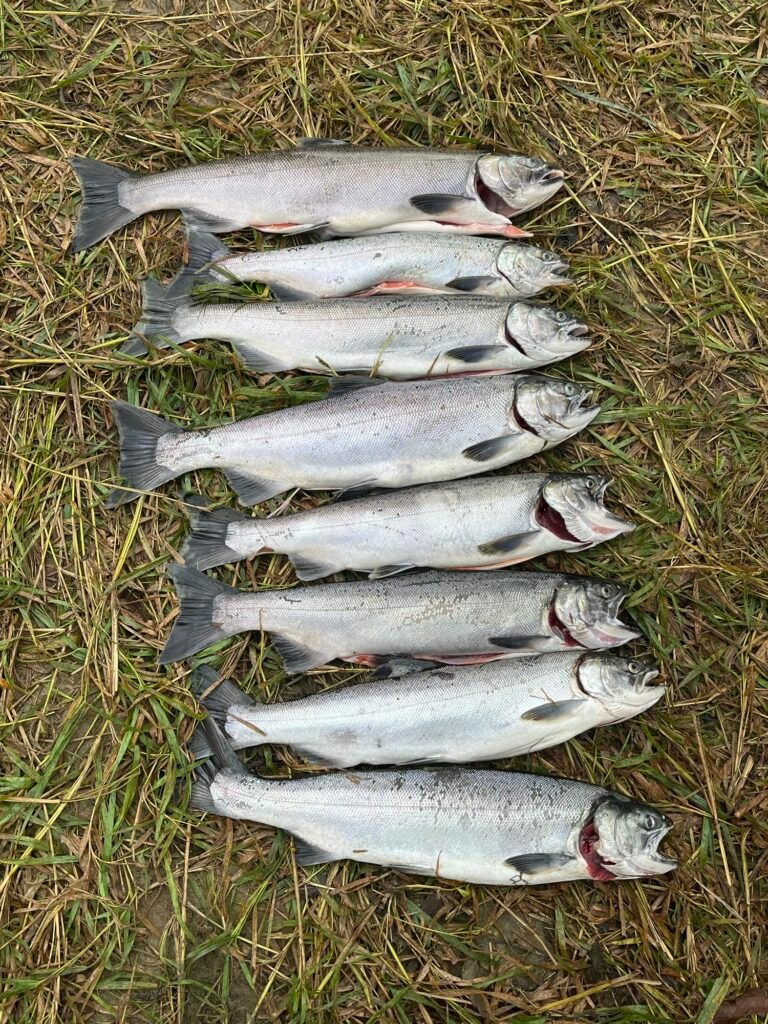
Coho are the most popular target at Nicomen Slough. They’re aggressive, hard-fighting, and peak during October when the fall colours are at their best. We consider Coho season the highlight of the Nicomen Slough fishing year.
- Peak timing: late September through October
- Top presentations: mottled beads and Embryo beads both proven Coho producers
- Full colour guidance in our Coho soft bead guide
Chum Salmon
Chum arrive at Nicomen Slough in November, often when most other anglers have packed it in. They’re larger than Coho and respond well to bold, colourful presentations. We consider late-season Chum one of the most underrated Nicomen Slough fishing opportunities of the year.
- Peak timing: November through early December
- Top presentations: mottled beads in chartreuse and hot pink
- Full late-season tactics in our Chum salmon bead fishing guide
Pink Salmon (Odd Years)
During odd-numbered years, pink runs turn the slough into non-stop action. They’re smaller than Coho or Chinook but can be caught cast-for-cast at peak windows — one of the most accessible Nicomen Slough fishing experiences for newer anglers.
- Runs in odd-numbered years only (2025, 2027, etc.)
- Colour guidance: see our pink salmon soft bead guide
Sockeye Salmon
Sockeye push through the slough in strong return years. They’re notoriously difficult to entice but respond to the right presentation. We always check Fisheries and Oceans Canada for current run-timing data and closures before targeting sockeye anywhere on the Fraser system.
- Run timing varies by year — monitor DFO updates closely
- Proven presentations in our Sockeye soft bead guide
White Sturgeon
Nicomen Slough holds resident white sturgeon. These are one of BC’s most iconic and protected species — all sturgeon are catch-and-release only under provincial and federal law with no exceptions. We use barbless hooks, a landing mat, and keep handling time to an absolute minimum.
- Catch-and-release only — year-round, no exceptions
- Use barbless hooks and a non-abrasive landing mat
- Keep fish horizontal, in or close to the water at all times
- Full handling requirements in DFO’s Nicomen Slough regulations
Cutthroat Trout
Cutthroat trout are resident in the slough year-round and provide great sport when salmon seasons are closed or fishing is slow. We target them with light drift rigs and float setups using 50/50 soft beads in natural tones. Our steelhead trout fishing guide covers winter technique crossovers equally effective on slough cutthroat.
Essential Gear for Nicomen Slough Fishing
We always tell anglers that the right gear for Nicomen Slough is versatile gear — the slough demands different setups for different species, depths, and seasons. Here’s what we run.
Rods and Reels
Rod and reel recommendations by technique:
- Float fishing: 12–14 ft centre-pin or float rod, smooth free-spool reel
- Drift fishing / bottom bouncing: 9–10 ft medium-heavy spinning rod, robust drag system
- Bank rod management: BeadnFloat Rod Huggers keep spare setups secure and off the ground while you work your main rod
- Bring at least two setups — conditions change and having a pre-rigged backup saves valuable time
BeadnFloat Soft Beads — Built for BC Rivers
Soft beads have become the dominant terminal tackle on BC salmon rivers, and Nicomen Slough fishing is no exception. Our BeadnFloat soft beads match the translucency, size, and movement of natural salmon eggs — the key food trigger during spawning migrations.
We offer three styles for different slough conditions:
- 50/50 soft beads — half-clear, half-opaque for low clear water; ideal for cutthroat and selective Coho
- Embryo soft beads — premium natural egg imitation; the most versatile option across species and seasons
- Mottled soft beads — high-visibility patterns for stained water, fast current, and Chum runs
Supporting Tackle
Complete Nicomen Slough tackle list:
- BeadnFloat jigs — depth-adjustable presentations for pools and riffles
- Soft worms — effective on summer Chinook and resident cutthroat
- Barbless hooks — required for sturgeon, strongly recommended for all Nicomen Slough species
- Slinky sinkers and split shot for rapid depth adjustment between zones
- Rubber-mesh landing net for catch-and-release handling
- Check the full range at the BeadnFloat shop before your trip
“The single best upgrade most Nicomen Slough anglers can make is switching from hard roe imitations to soft beads. The difference in catch-and-release outcomes — and often in strike rate — is significant.”
Top Techniques for Fishing Nicomen Slough
We use three core techniques at Nicomen Slough, sometimes all three in the same session depending on what the water is doing. Here’s the breakdown:
Float Fishing
Float fishing is the most popular and consistently effective technique for presenting soft beads at the correct depth. The goal is to run your bead 6–18 inches above the bottom at current speed — drag is the single biggest presentation killer on the slough.
Float fishing key points:
- Mend your line continuously to eliminate float drag
- Adjust float depth as you move between zones — the slough changes depth significantly
- Embryo beads for clear water, mottled beads for stained or fast runs
- Works in all three slough zones but most effective in the upper and middle sections
Drift Fishing
Drift fishing without a float works well in the deeper, faster runs of the middle and lower slough. We cast upstream at a 45-degree angle, follow the drift with our rod tip, and let the slinky sinker maintain bottom contact. This technique pairs cleanly with our jig range and is especially effective for Coho and Chinook in the fall. For deeper technique coverage, our Chilliwack River salmon guide covers drift fishing principles that apply across BC river systems.
Bottom Bouncing
Bottom bouncing is the go-to method for white sturgeon and large Chinook in the deeper holes of the lower slough. We set a heavier sinker rig with natural bait, place the rod in a Rod Hugger on the bank, and watch for the tap-tap-tap of a sturgeon investigating. Don’t strike too early — patience is the core skill here.
Nicomen Slough Fishing Regulations 2026
We check regulations before every single trip to Nicomen Slough — not just at the start of the season. Rules change mid-season and emergency closures are called regularly during fall salmon runs. Here’s what you need to know.
Fishing Licence Requirements
A valid BC Freshwater Fishing Licence is mandatory for all anglers 16 and over. Targeting Chinook or Coho salmon additionally requires a Salmon Conservation Surcharge stamp. We cover all of this in detail in our BC Fishing Licence Guide 2026 — including where to buy, what stamps are required, and the new FWID system effective April 1, 2026. The official provincial portal is at gov.bc.ca/fishing.
Catch Limits and Size Restrictions
Nicomen Slough is regulated under DFO Region 2 freshwater regulations. Key rules for 2026:
- White sturgeon — catch-and-release only, year-round, no exceptions
- Chinook and Coho — retention limits change annually based on escapement data; always verify before each trip
- Cutthroat trout — check size and retention rules by specific slough section
- Download the current BC Freshwater Fishing Regulations synopsis from the Province and keep it on your phone
“We bookmark the DFO website and check it the evening before every fall trip to the slough. In-season amendments can drop at any time.”
Seasonal Closures
Emergency closures can be called at any time during sensitive spawning windows — we’ve seen them announced with less than 24 hours notice during heavy fall runs.
- Check DFO’s in-season announcements page the evening before every fall trip
- The Fraser Basin Council publishes watershed health updates relevant to broader slough conditions
- No catch is worth the long-term cost of fishing through a closure
Boat Access and Bank Fishing at Nicomen Slough
We fish Nicomen Slough both by boat and from the bank depending on the season and section. Both options are productive — here’s what to know about each.
Boat access:
- Public boat launch near the slough’s mouth — accommodates standard trailer boats
- Check the Canadian Hydrographic Service for water levels before spring launching — high water affects the ramp
- For boating safety protocols on BC waterways: Transport Canada’s boating safety resources
Bank access:
- The dyke system provides kilometres of fishable water accessible on foot
- Focus on sections with structure — fallen logs, weed edges, and current seams concentrate fish
- Stick to the public dyke right-of-way — respect private property boundaries throughout
- A boat is not required for a productive Nicomen Slough fishing day — most of our best Coho sessions have been from the bank
Local Guides and Fishing Charters at Nicomen Slough
A local guide is one of the best investments you can make for your first Nicomen Slough fishing trip. We recommend guides with specific slough experience — not just general Fraser Valley knowledge. They know the current holding spots, have real-time run-timing intelligence, and significantly compress the learning curve for new anglers.
What to look for in a Nicomen Slough guide:
- Specific Nicomen Slough experience and local knowledge of the seasonal run timing
- Conservation-first practices — barbless hooks, minimal handling, proper fish revival as standard procedure
- Check the Sport Fishing BC directory for licensed operators
- The Habitat Conservation Trust Foundation BC is another resource for finding reputable guided operations
Conservation and Ethical Fishing at Nicomen Slough
The quality of Nicomen Slough fishing today exists because previous generations of anglers protected it. We take that responsibility seriously on every trip. Here’s how we fish the slough ethically:
- Catch and release all sturgeon. No exceptions. No hero photos requiring extended air time.
- Pack out everything you bring in. Monofilament, packaging, and bait containers harm wildlife along the dykes.
- Respect closures. An emergency closure protects the spawning fish that sustain next year’s run — no day of fishing is worth ignoring one.
- Use soft beads over hard roe imitations. Soft beads reduce injury on catch-and-release fish, which matters when a single Coho can encounter dozens of anglers during its migration.
- Support habitat protection. Organisations like the Fraser Basin Council, HCTF BC, and Ducks Unlimited Canada protect the wetland and riparian habitats that make fisheries like Nicomen Slough viable long-term.
FISH NICOMEN SLOUGH WITH COMPLETE CONFIDENCE
You now know everything for a successful Nicomen Slough fishing trip:
- The three zones and which techniques work in each
- The seasonal calendar — spring cutthroat through November Chum
- Every target species and the right presentation for each
- Current 2026 regulations, licensing requirements, and how to check closures
- Boat launch and bank access details for the slough
- Conservation practices that protect the fishery for future seasons
Ready to gear up for Nicomen Slough?
🎣 BeadnFloat — BC River-Tested Tackle
✅ Legal on BC rivers — single barbless hook compatible: 6mm, 8mm, 10mm, 12mm, 14mm, 16mm, 19mm
✅ Proven for Coho, Chum, Sockeye, Pink salmon and cutthroat trout
✅ Catch-and-release friendly — soft construction reduces fish injury
✅ Complete tackle range: soft beads, jigs, soft worms, Rod Huggers
✅ Free shipping $55+ | 30-day returns | $7.88/pack
SHOP NICOMEN SLOUGH TACKLE NOW →
Conclusion
To bring it all together, a few things we always remind ourselves before every Nicomen Slough fishing trip:
- Check DFO Nicomen Slough regulations the evening before — closures happen with short notice in fall
- Bring the right licence and stamp — see our BC Fishing Licence Guide 2026 if you’re unsure what’s required
- Match your tackle to the species and water conditions — Embryo beads for clear water, mottled beads for stained or fast runs
- Release sturgeon correctly — keep them horizontal, in the water, and revived fully before release
- Respect the fishery — Nicomen Slough fishing is as good as it is because of the anglers who protected it before us
Whether we’re targeting October Coho with a float rod, bottom bouncing for sturgeon on a November tide push, or drifting soft beads at winter cutthroat, the slough delivers season after season. We’ll see you on the dyke.
For more BC fishing information, explore our guides to the Chilliwack River, Vedder River spring fishing, and our full fishing guide library.
FAQ
Q: Is Nicomen Slough open for fishing year-round?
A: Most sections of the slough are open year-round, but specific species have defined retention seasons and are subject to emergency closures — particularly during fall salmon runs. We always check the latest DFO Nicomen Slough regulations the evening before every fall trip. Closures can be called with less than 24 hours notice during heavy run events.
Q: What is the best time of year for Nicomen Slough fishing?
A: The fall salmon season — September through November — is the undisputed peak for Nicomen Slough fishing. Coho arrive in late September and run through October; Chum follow in November. Summer Chinook fishing from July onward is also excellent. Our Coho soft bead guide covers fall tactics in depth, and the Chum bead guide is essential for late-season action.
Q: Do I need a special licence to fish Nicomen Slough?
A: You need a valid BC Freshwater Fishing Licence. Targeting Chinook or Coho salmon additionally requires a Salmon Conservation Surcharge stamp. Starting April 1, 2026, licences link to a Fish and Wildlife ID (FWID) rather than the old Angler Number system. Our BC Fishing Licence Guide 2026 covers everything — what’s required, where to buy, and how the new FWID system works.
Q: Can you keep white sturgeon caught at Nicomen Slough?
A: No. White sturgeon are catch-and-release only throughout Nicomen Slough and the broader Fraser system — year-round, no exceptions. Use barbless hooks, keep the fish horizontal and in the water, and ensure full revival before release. DFO’s regulations page outlines specific handling requirements for sturgeon at Nicomen Slough.
Q: What soft bead colours work best at Nicomen Slough?
A: Colour depends on water clarity and target species. In clear water, natural peach and orange in our Embryo beads are top producers. In stained or fast water, brighter mottled patterns in chartreuse or hot pink outperform. Species-specific colour guidance is in our Chum guide, Coho guide, and Sockeye guide.
Q: Is there a public boat launch at Nicomen Slough?
A: Yes. There is a public boat launch near the mouth of the slough that accommodates standard trailer boats. We recommend checking the Canadian Hydrographic Service for current water levels before launching in spring — high water can significantly affect ramp conditions.
Q: Is Nicomen Slough good for bank fishing?
A: Absolutely — and many of our best sessions have been from the bank. The dyke system provides extensive walking access along most of the slough’s length. We don’t consider a boat necessary for productive Nicomen Slough fishing, particularly for Coho and Chum in the fall. The upper and middle sections are especially well-suited to bank anglers.
Q: What rod setup should I use for Nicomen Slough salmon?
A: For float fishing, a 12–14 ft float or centre-pin rod is ideal. For drift fishing or bottom bouncing, a 9–10 ft medium-heavy spinning rod handles most situations. We always bring a spare rigged setup to the bank and store it in BeadnFloat Rod Huggers while working our primary rod.
Q: How far is Nicomen Slough from Vancouver?
A: Approximately 90 minutes east of Vancouver via Highway 1 and Lougheed Highway (Highway 7), near Dewdney, BC. It’s one of the most accessible quality salmon fisheries in the province for Metro Vancouver and Fraser Valley anglers — close enough for a day trip, productive enough to plan a full week around.
Q: Are there guided fishing trips available at Nicomen Slough?
A: Yes. Several local guides and charter operators run trips on Nicomen Slough, particularly during the fall salmon season. We recommend using the Sport Fishing BC directory to find licensed guides with specific Nicomen Slough experience. A guided trip dramatically improves catch rates for anglers new to the fishery, and most guides supply terminal tackle — including soft beads — as part of the package.

About author

Add comment