 Guide
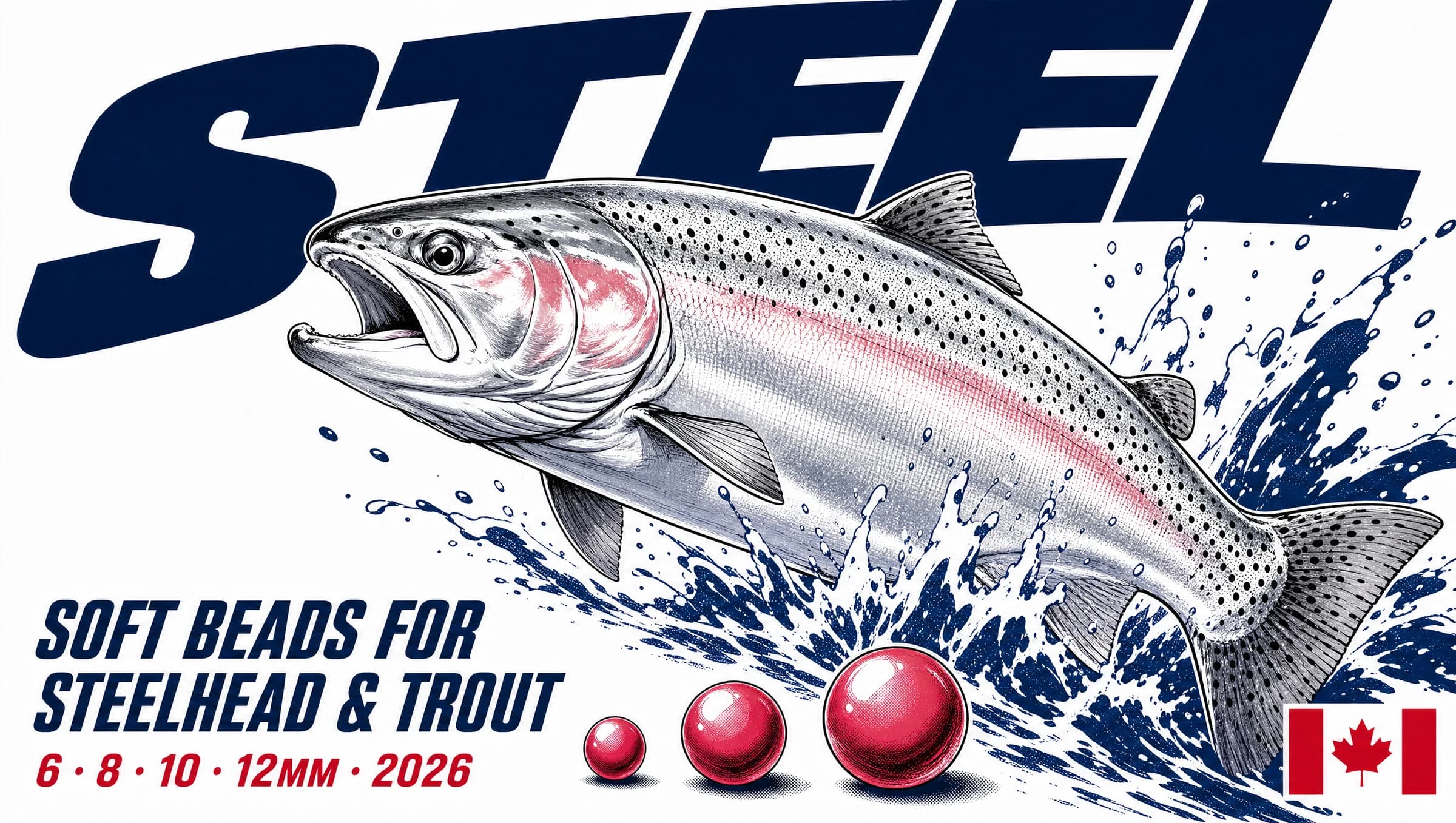
GuideSoft beads for steelhead & trout
No fish is more devoted to eating eggs than a steelhead behind spawning salmon — and no fish is fussier about how those eggs are presented. Trout are the same story in miniature. This guide covers soft bead selection for steelhead and trout: the sizes that match real eggs, the colours that work through the winter, and the small refinements that separate one hook-up a day from a dozen.
1. The ultimate egg-eaters
Salmon hit beads out of aggression. Steelhead and trout hit them because eggs are genuinely their food. From the first chinook spawn in September to the last chum eggs washing out in January, egg protein is the richest meal in the river — and steelhead, rainbows, cutthroat and bull trout queue up behind the redds to eat it.
That difference changes how you fish. A salmon forgives a clumsy drift; a steelhead that's been eating real eggs for three months does not. Dead-drift, depth, and a bead that feels soft in the mouth matter more here than anywhere else in the sport. The foundations — rigging, reading water, working a drift — are all in the complete soft bead guide; this page is about choosing the right bead.
2. Steelhead: size & colour
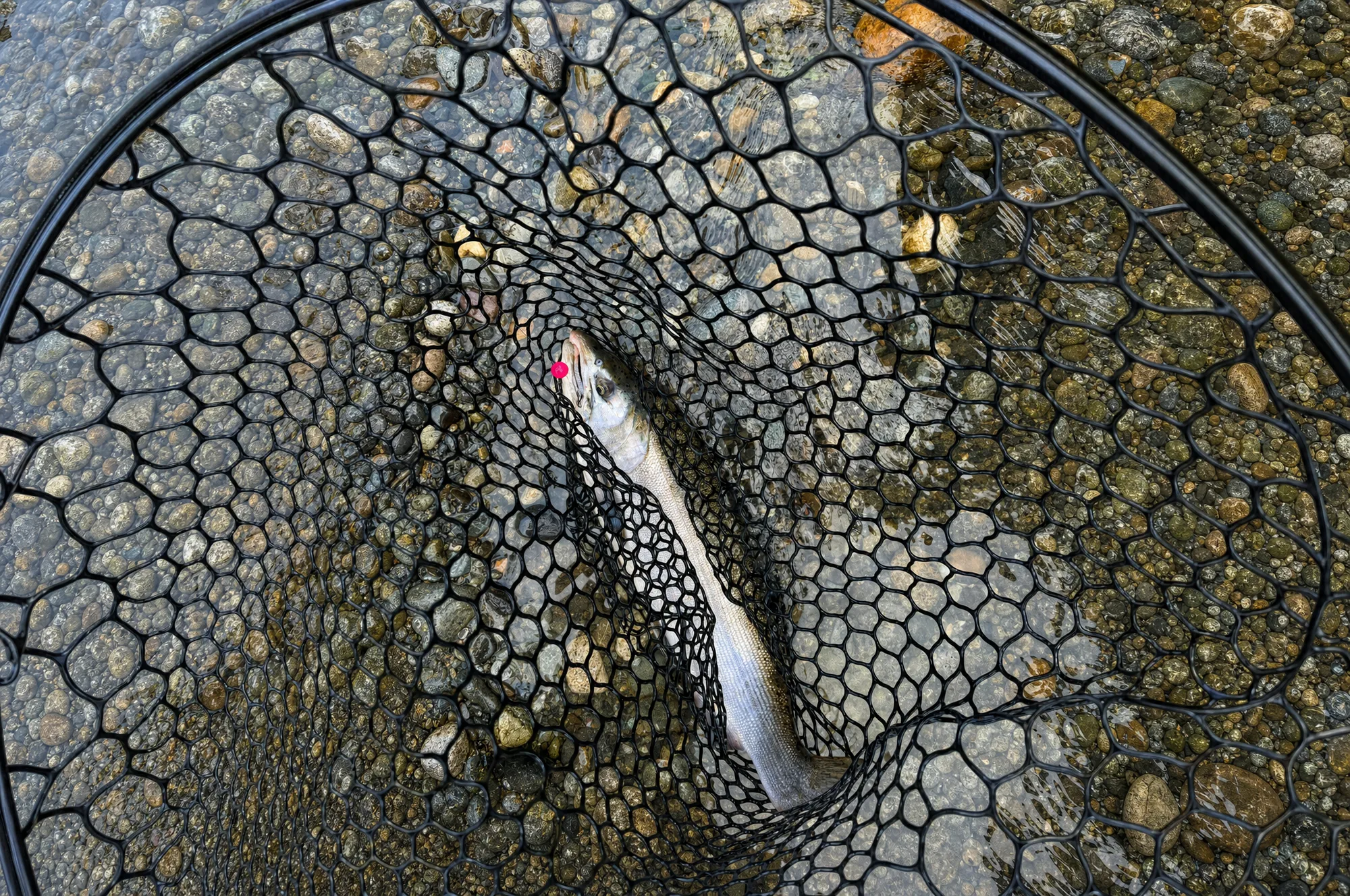
The steelhead sweet spot is 10–14mm, with 12mm the single most useful size — big enough to be seen in steelhead-green water, small enough to pass as a real egg cluster fragment.
| Water condition | Size | Colours |
|---|---|---|
| Green & dropping — prime | 12mm (10–14) | Cerise, Raspberry, Disco Pink |
| Low & clear | 8–10mm | Pink Pearl, Amber, Plum |
| High & coloured | 14mm | Hot Pink, Flo Orange, Fluorescent Pink Mottled |
| Late season, pressured fish | 10mm | Watermelon, Maroon Red, Blood Red |
BC winter steelhead run December through April — the steelhead journal page has the full run-timing calendar, and the live Vedder conditions page tells you whether today is a green-and-dropping day before you drive.
3. Trout: going small
Rainbows, cutthroat and bull trout eat eggs greedily but have small mouths and sharp eyes. The trout range is 6–10mm:
- 6mm — small stream trout, ultra-clear water, and any fish that's refused everything else. Orange Pearl and Amber are the natural picks.
- 8mm — the everyday trout size behind spawning salmon. Jelly Apple and 50/50 Cherry Red match loose sockeye and pink eggs well.
- 10mm — big-river bull trout and sea-run cutthroat gorging behind chum. Step up to Raspberry or Watermelon.
Scale the whole rig down with the bead: lighter float, 6–8lb fluorocarbon leader, size 6–8 hook. The take is often just a hesitation of the float — strike anything.
4. The winter progression
Steelhead see thousands of beads over a season, and what worked in December gets refused in March. A simple progression that mirrors what the fish are actually eating:
- Early winter (Dec–Jan): fresh eggs are still drifting — bright and confident: Cerise, Hot Pink, 12–14mm.
- Mid-winter (Jan–Feb): eggs in the drift are older and washed out — translucent and two-tone: Raspberry, 50/50 Hot Pink, Pink Copper, 10–12mm.
- Late winter (Mar–Apr): almost no real eggs left, fish are pressured — dark and dead: Plum, Maroon Red, 10mm, longer leader.
5. Presentation refinements
- Depth is everything. Eggs travel in the bottom 30cm of the water column. If you're not occasionally ticking bottom, add depth.
- Peg distance: 4–5cm above a bare hook — the bead slides on the take and the hook finds the corner of the mouth.
- Follow the float down, not across. Any drag kills the drift; mend early and often. The full drift technique is in the main guide.
- Change beads before you change spots. A steelhead that refused cerise will often eat raspberry on the very next cast — steelhead hold in the same slot all day.
- Worms as the change-up: when the bead bite dies mid-day, a soft worm through the same slot triggers reaction strikes beads can't. Hot pink for steelhead is the classic.
6. FAQ
What size bead is best for steelhead?
12mm is the most versatile steelhead bead, sizing down to 8–10mm in low clear water and up to 14mm in high or coloured water. Trout take 6–10mm.
What is the best bead colour for winter steelhead?
Cerise and raspberry are the season-long producers in BC. Early winter favours bright pinks; by late winter, washed-out and dark tones — plum, maroon, watermelon — out-fish bright colours on pressured fish.
Do soft beads work for trout?
Extremely well — trout feed on drifting eggs wherever salmon or other trout spawn. Fish 6–10mm beads on light leaders under a small float, and expect subtle takes.
Why am I not hooking up on bead takes?
Usually the peg distance or slack in the drift. Keep the bead 4–5cm above the hook, keep a tight-enough line to strike the instant the float buries, and check that your bead still slides freely to the peg.