 Guide
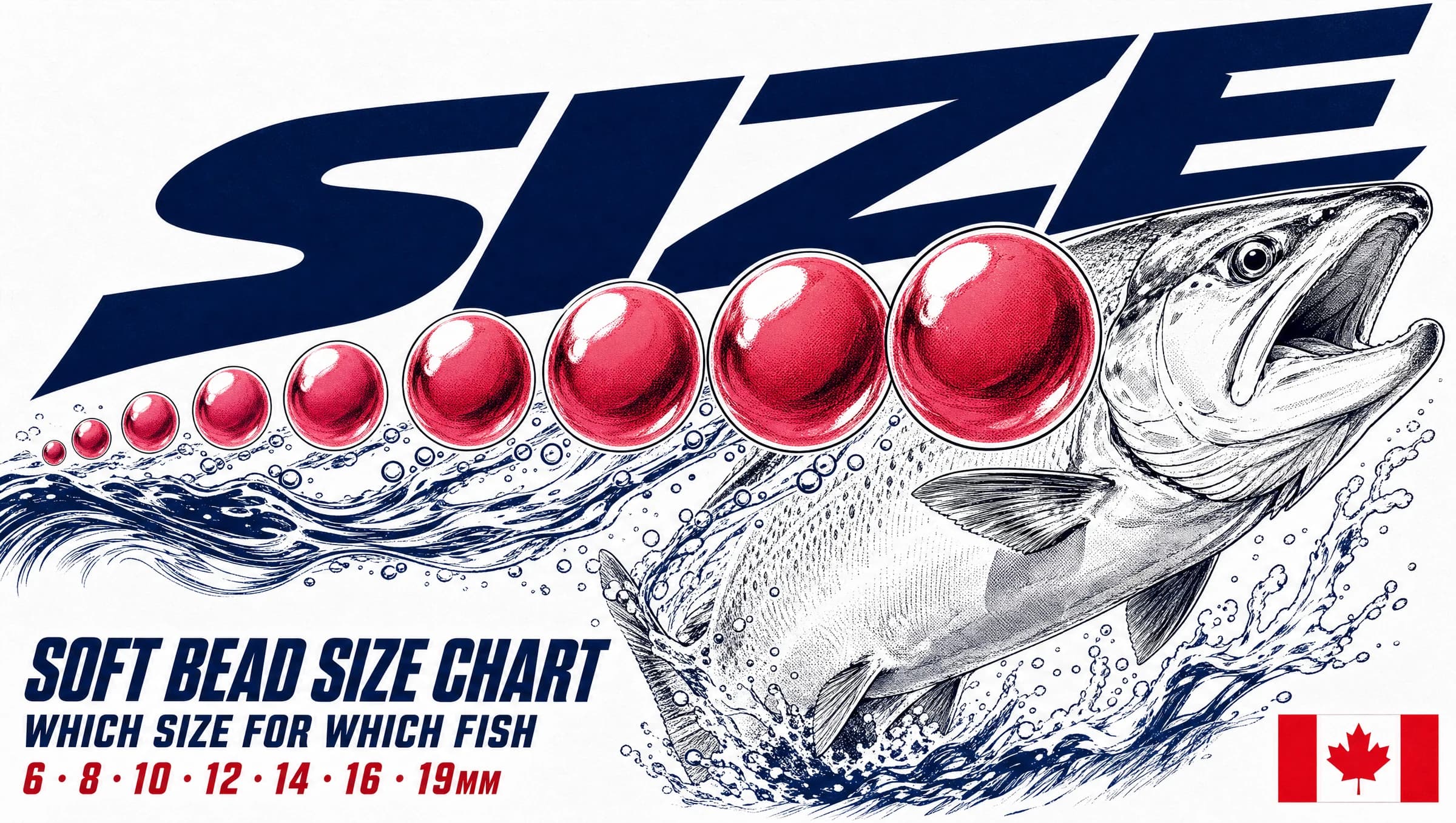
GuideSoft bead size chart — which size for which fish
Every BeadnFloat colour comes in seven sizes, 6mm to 19mm — and choosing between them is the highest-leverage decision in bead fishing. Too small and fish never see it; too big and pressured fish refuse it. This chart tells you exactly what each size is for, what real egg it imitates, and when to size up or down.
1. The size chart
| Size | Primary target | Best water | Starting colours |
|---|---|---|---|
| 6mm | Trout in small streams | Low, clear, pressured | Orange Pearl, Amber |
| 8mm | Trout, sea-run cutthroat | Clear to lightly stained | Jelly Apple, Pink Pearl |
| 10mm | Steelhead (clear water), bull trout, pinks | Low & clear | Raspberry, Watermelon |
| 12mm | Steelhead — the workhorse, coho | Green & dropping (prime) | Cerise, Disco Pink |
| 14mm | Steelhead (high water), coho, chum | High or coloured | Hot Pink, Chartreuse |
| 16mm | Chinook, big chum | Big water, any colour | Orange Blaze, Cerise |
| 19mm | Chinook | Heavy, coloured big rivers | Orange Blaze, Flo Orange |
2. What each size imitates
Bead sizes aren't arbitrary — each maps to something real drifting in the river:
- 6–8mm ≈ single trout, pink and sockeye eggs. Sockeye eggs run about 5–6mm; pink eggs slightly larger.
- 10–12mm ≈ single chum and coho eggs, and small clusters of smaller eggs. Coho eggs are roughly 7–9mm, and a 10–12mm bead reads as an egg with the swollen, water-hardened profile eggs take on after time in the drift.
- 14–19mm ≈ chinook eggs and multi-egg clusters. Chinook eggs are the largest of any Pacific salmon, and a big travelling chinook responds to a big target.
This is also why the Embryo series exists — the eyed-egg dot imitates a developing egg, deadly late in the season — and why mottled patterns mimic fertilized, opaque eggs rather than fresh translucent ones.
3. When to size up or down
Start from the chart, then adjust with three simple rules:
- Visibility rule: under about 45cm of visibility, go up one size. Over about a metre, go down one. The fish has to see the bead before it can eat it — and in gin-clear water, an oversized bead reads as fake.
- Pressure rule: weekend-pressured runs and late-season fish get smaller, darker beads. A 10mm Plum catches March steelhead that have refused every 14mm pink in the valley.
- Confidence rule: when in doubt between two sizes, fish the larger one in fast or deep water (it's seen sooner) and the smaller one in slow, walking-pace water (fish get a long look).
4. Pack counts by size
Bigger beads mean fewer per pack — here's what you get in every BeadnFloat colour:
| Size | Beads per pack | Hook size |
|---|---|---|
| 6mm | 20 | #8–#6 |
| 8mm | 18 | #6–#4 |
| 10mm | 16 | #4–#2 |
| 12mm | 14 | #2–#1 |
| 14mm | 12 | #1–1/0 |
| 16mm | 10 | 1/0–2/0 |
| 19mm | 8 | 2/0–3/0 |
Every pack is the same price regardless of size, and every colour in the range is poured in all seven sizes — so a full size run of your confidence colour is a cheap insurance policy.
Hook sizes are typical pairings for pegged-bead rigs — match your hook to local regulations and conditions.
5. FAQ
What is the most versatile soft bead size?
12mm. It covers steelhead in prime green water, coho, and doubles for high-water trout — if you only carry one size, carry 12mm in Cerise and Raspberry.
What size bead for steelhead?
10–14mm depending on water clarity: 12mm as the default, 10mm in low clear water, 14mm in high or coloured water. The full logic is in our steelhead & trout bead guide.
What size bead for salmon?
Coho: 10–14mm. Chum: 12–16mm. Chinook: 14–19mm. Pinks: 8–12mm. Species-by-species colour picks are in the salmon bead guide.
Do bigger beads catch bigger fish?
Not directly — bead size should match what fish can see and what they're eating, not the size of fish you hope for. Big chinook do prefer big beads, but a trophy steelhead in clear water is caught on a 10mm, not a 19mm.